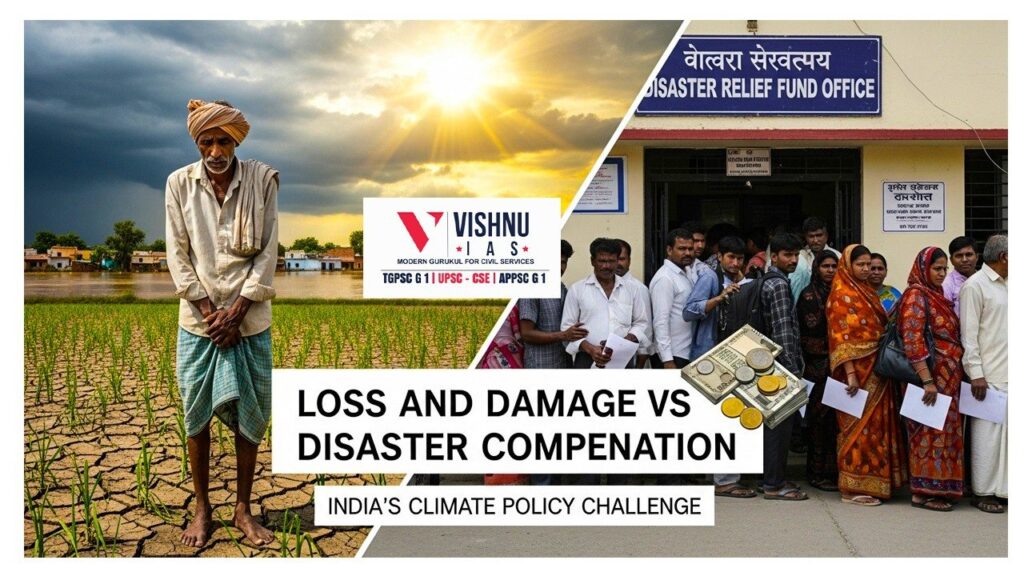
Loss and Damage is central to climate justice, but in India it is reduced to disaster compensation. This critical analysis explains how narrowing Loss and Damage weakens climate governance, planning, and resilience.

How Narrowing ‘Loss and Damage’ Hampers India’s Climate Policy Responses

How Narrowing ‘Loss and Damage’ Hampers India’s Climate Policy Responses Introduction Loss and Damage refers to the irreversible and residual impacts of climate change that occur beyond the limits of adaptation, encompassing not only physical destruction but also loss of lives, livelihoods, ecosystems, cultural heritage, identity, and social cohesion. Internationally, it has emerged as a […]

How Narrowing ‘Loss and Damage’ Hampers India’s Climate Policy Responses Read More »

Neo-colonialism explains how states remain sovereign in law but are controlled through economic dependence, sanctions, finance, and strategic coercion.

Neo-Colonialism: Independent in Theory, Directed from Outside

Neo-Colonialism: Independent in Theory, Directed from Outside Neo-colonialism refers to a condition where a formally sovereign state retains constitutional independence, international recognition, and domestic institutions, yet its economic structures, policy choices, and strategic autonomy are decisively shaped by external powers. The term gained prominence during the post-decolonisation phase of the mid-20th century, when political freedom

Neo-Colonialism: Independent in Theory, Directed from Outside Read More »

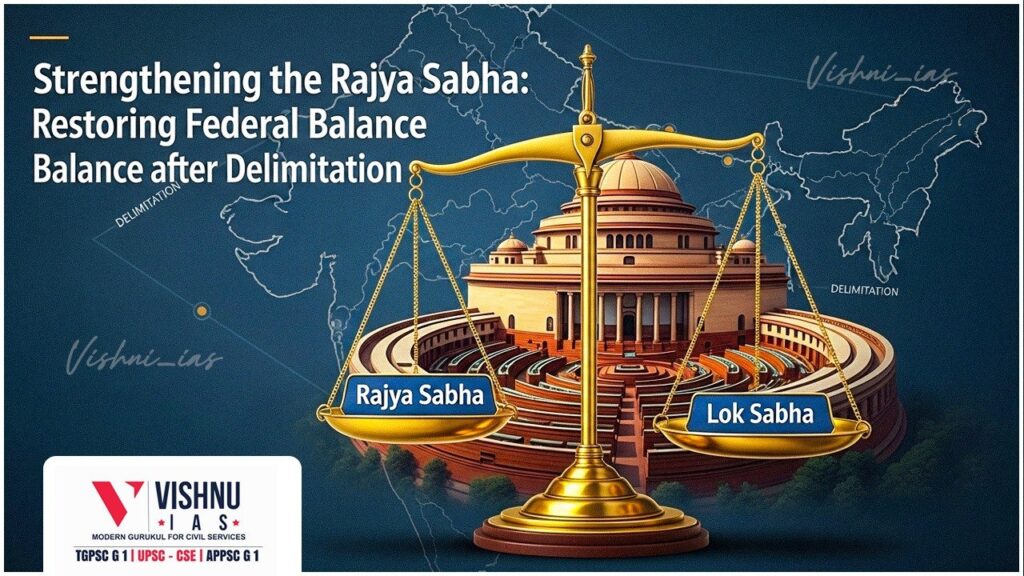
Strengthening the Rajya Sabha after delimitation can act as a corrective mechanism to balance federal representation, preserve cooperative federalism, and address population-based imbalances in the Lok Sabha.

Strengthening the Rajya Sabha after Delimitation: A Federal Corrective Mechanism

Introduction Strengthening the Rajya Sabha after delimitation has emerged as a crucial constitutional debate as India prepares for a major restructuring of political representation. Delimitation refers to the constitutional process of redrawing electoral boundaries and reallocating seats to reflect population changes. India’s inter-State allocation of Lok Sabha seats has been frozen since the 1971 Census,

Strengthening the Rajya Sabha after Delimitation: A Federal Corrective Mechanism Read More »

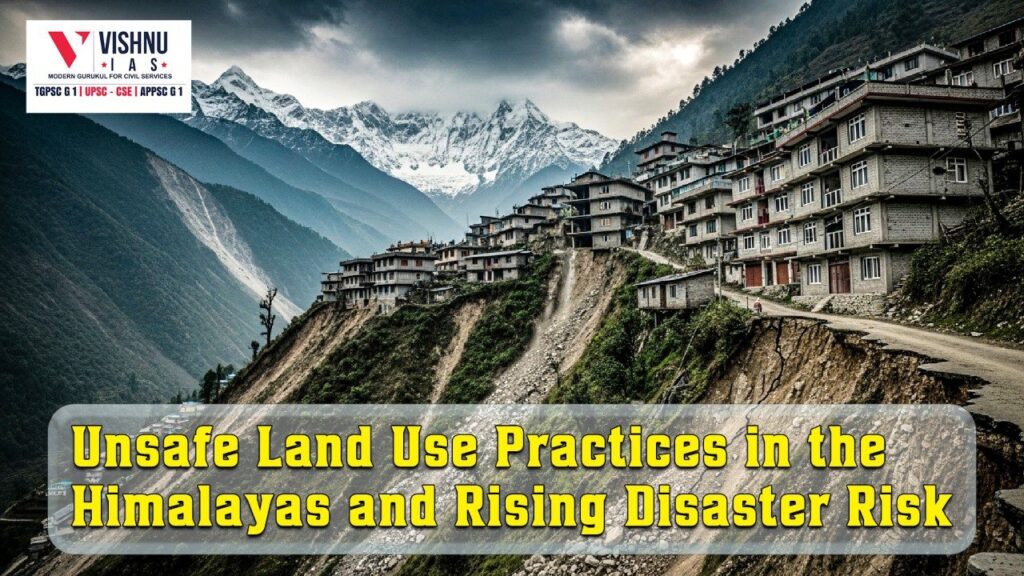
Unsafe land use practices in the Himalayas such as slope cutting, tunnelling, and muck dumping are amplifying disaster risk through landslides, floods, and ecological instability. Understand how unscientific development is turning natural hazards into recurring catastrophes.

Unsafe Land Use Practices in the Himalayas and Rising Disaster Risk

Unsafe Land Use Practices in the Himalayas and Rising Disaster Risk Unsafe land use practices in the Himalayas have emerged as a major driver of disaster risk, intensifying landslides, flash floods, land subsidence, and ecological degradation. Activities such as indiscriminate slope cutting, poorly assessed tunnelling, and unscientific muck dumping are transforming naturally fragile mountain systems

Unsafe Land Use Practices in the Himalayas and Rising Disaster Risk Read More »

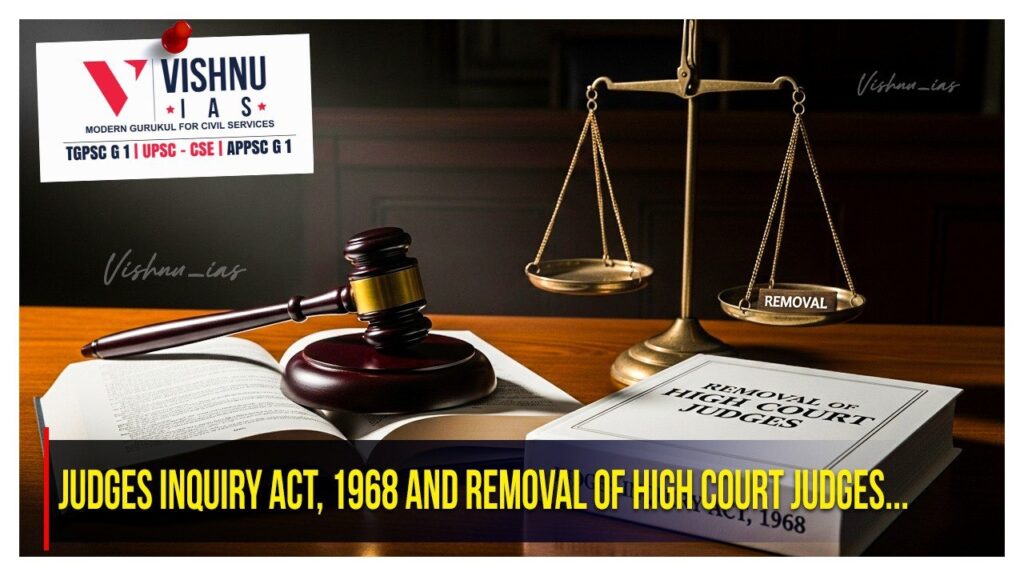
The removal of High Court judges in India is governed by Articles 217 and 124 and the Judges (Inquiry) Act, 1968. This article examines whether the current system fairly balances judicial independence and accountability.

Removal of High Court Judges in India: Constitutional Framework, Independence and Accountability

Removal of High Court Judges in India: Constitutional Framework, Independence and Accountability Introduction The removal of High Court judges in India represents one of the most delicate constitutional questions in Indian democracy, situated at the intersection of judicial independence and democratic accountability. The Constitution consciously adopts the term “removal” rather than “impeachment” for judges, underscoring

Removal of High Court Judges in India: Constitutional Framework, Independence and Accountability Read More »

The revival of Spheres of Influence in contemporary geopolitics is reshaping power politics in the Western Hemisphere and Southeast Asia. This article evaluates how this trend challenges the authority, legitimacy, and enforcement capacity of the United Nations.

Revival of Spheres of Influence in Contemporary Geopolitics and the United Nations Crisis

Introduction The concept of Spheres of Influence refers to an informal geopolitical arrangement in which a powerful state claims predominant strategic, political, or security interests over a defined region, limiting the autonomy of other states and discouraging external intervention. Though never codified in international law, this practice shaped 19th- and early 20th-century imperial politics and

Revival of Spheres of Influence in Contemporary Geopolitics and the United Nations Crisis Read More »

India–EU Free Trade Agreement marks a strategic shift in India’s engagement with the EU, shaping trade diversification, regulatory standards, and strategic autonomy.

India–EU Free Trade Agreement: Significance for Trade, Standards and Strategic Autonomy

India–EU Free Trade Agreement: Significance for Trade, Standards and Strategic Autonomy Introduction India’s engagement with the European Union (EU) in 2026 marks a qualitative shift from traditional bilateralism to bloc-level diplomacy, reflecting the EU’s character as a 27-member regulatory and economic union rather than a single national actor. With the India–EU Free Trade Agreement emerging

India–EU Free Trade Agreement: Significance for Trade, Standards and Strategic Autonomy Read More »

Explore the feasibility of using the Lokpal as a constitutional filter for corruption probes against public servants and examine how this mechanism balances investigative independence with executive protection in India’s governance framework.

Lokpal as a Constitutional Filter: Balancing Investigative Independence and Executive Protection

Lokpal as a Constitutional Filter: Balancing Investigative Independence and Executive Protection Lokpal as a constitutional filter has emerged as a crucial governance debate in India’s anti-corruption discourse, particularly in the context of corruption probes against public servants and the tension between investigative autonomy and executive protection. Introduction Corruption poses a systemic challenge to constitutional governance,

Lokpal as a Constitutional Filter: Balancing Investigative Independence and Executive Protection Read More »

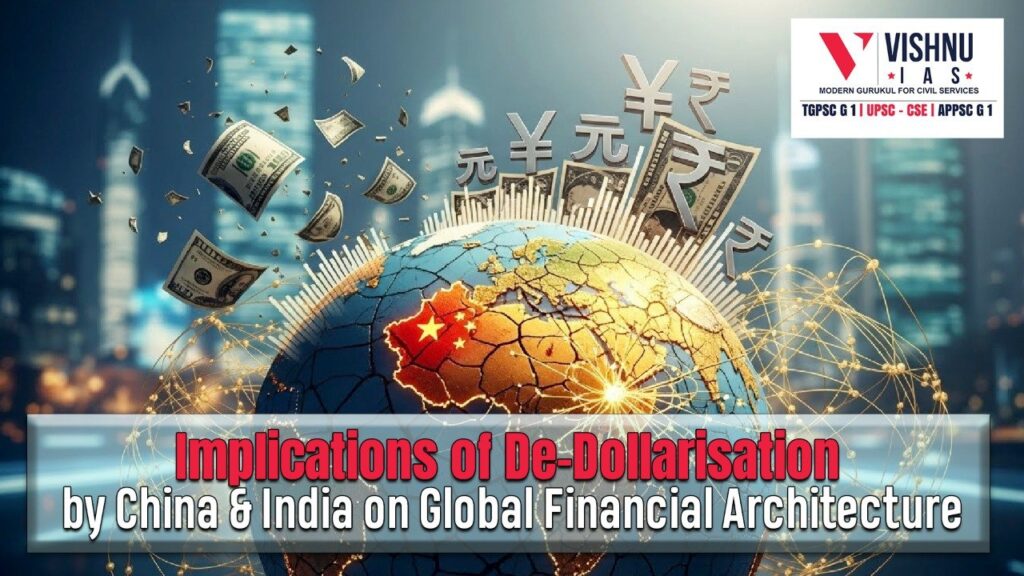
De-dollarisation implications are reshaping the global financial architecture as China and India reduce reliance on the US dollar through local currency trade, energy settlements, and alternative payment systems.

De-dollarisation Implications for Global Financial Architecture: China and India’s Strategic Shift

De-dollarisation Implications for Global Financial Architecture: China and India’s Strategic Shift De-dollarisation implications have become a central theme in debates on the future of the global financial architecture. As countries like China and India experiment with reducing reliance on the U.S. dollar in trade, finance, and reserves, the long-standing dollar-centric system is witnessing cautious but

De-dollarisation Implications for Global Financial Architecture: China and India’s Strategic Shift Read More »

A critical analysis of continuing mandamus in India’s environmental governance and how judicial intervention impacts the institutional capacity of environmental regulators.

Continuing Mandamus and Environmental Governance in India: Judicial Activism vs Regulatory Capacity

Continuing Mandamus and Environmental Governance in India: Judicial Activism vs Regulatory Capacity Continuing mandamus environmental governance India has emerged as a defining feature of judicial intervention in recent decades, raising critical questions about the balance between constitutional oversight and the autonomy of specialized environmental regulators. Introduction Environmental governance in India operates within a complex constitutional

Continuing Mandamus and Environmental Governance in India: Judicial Activism vs Regulatory Capacity Read More »

Scroll to Top