

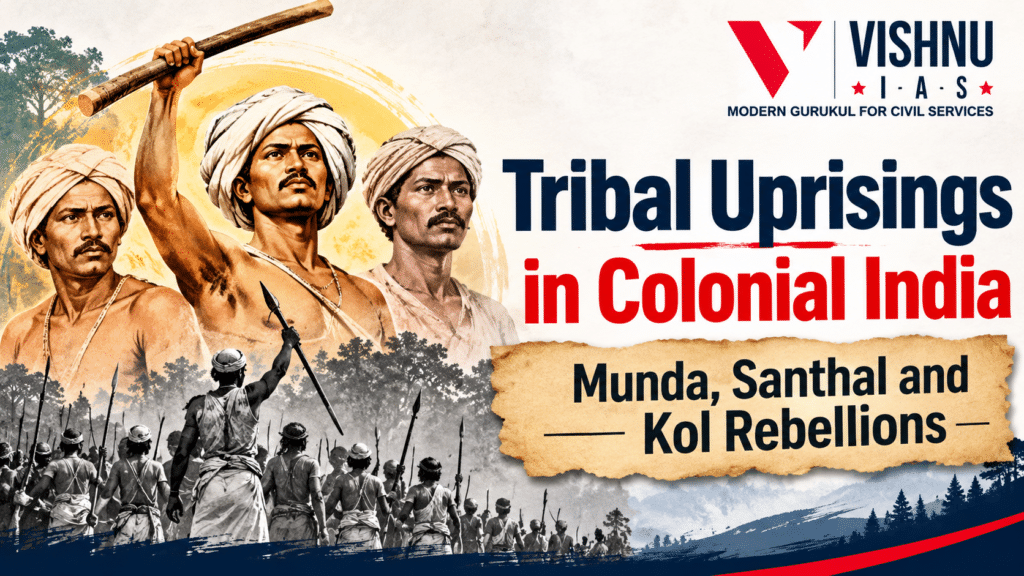
Tribal Uprisings in Colonial India: Munda, Santhal and Kol Rebellions
Tribal uprisings in colonial India were largely responses to the disruption of traditional tribal socio-economic structures by colonial policies. The introduction of new land revenue systems, land alienation and the emergence of exploitative intermediaries such as zamindars, moneylenders and traders (collectively perceived as Dikus) generated widespread resentment among tribal communities.
I. Exploitation
- Colonial land settlements undermined customary systems of communal ownership and brought tribal lands under formal revenue arrangements, facilitating their transfer to outsiders.
- Zamindars, moneylenders, traders and revenue farmers exploited tribal communities through excessive rents, usurious interest rates, fraudulent debt practices and illegal land transfers.
- The imposition of Begar (unpaid labour), arbitrary levies and restrictions on access to forests disrupted traditional livelihoods.
- Colonial administrative and judicial institutions weakened traditional tribal chiefs, customary laws and community-based governance structures.
II. Major Tribal Rebellions
1. Kol Rebellion (1831–32)
- The Kols of Chotanagpur revolted against the transfer of their ancestral lands to outsiders, particularly Sikh and Muslim farmers, landlords and moneylenders. Led by Buddhu Bhagat, the rebellion spread across Ranchi, Singhbhum, Hazaribagh and Palamau. It reflected resistance to both British administrative interference and the exploitation of indigenous communities by outsiders.
2. Santhal Rebellion / Hul (1855–56)
- Led by Sidhu and Kanhu Murmu, the Santhals revolted against the exploitation of zamindars, moneylenders (Mahajans), revenue officials and oppressive police. Fraudulent debt practices, excessive rents and land alienation intensified their grievances. The Santhals proclaimed an end to Company rule and sought to establish their independent authority.
3. Munda Rebellion / Ulgulan (1899–1900)
- Led by Birsa Munda, the movement opposed the destruction of the traditional Khuntkatti system of communal land ownership. Exploitation by Jagirdars, Thikadars, moneylenders and forest contractors, along with forced labour, intensified tribal discontent. Birsa sought to establish Munda Raj, restoring tribal autonomy, land rights and cultural identity.
Conclusion
Although these rebellions were suppressed militarily, they exposed the exploitative nature of colonial agrarian administration and the role of indigenous intermediaries in tribal dispossession. They also compelled administrative responses, including the creation of Santhal Parganas and the enactment of the Chotanagpur Tenancy Act, 1908. Thus, tribal uprisings represented both anti-colonial resistance and struggles for socio-economic justice and indigenous autonomy.