
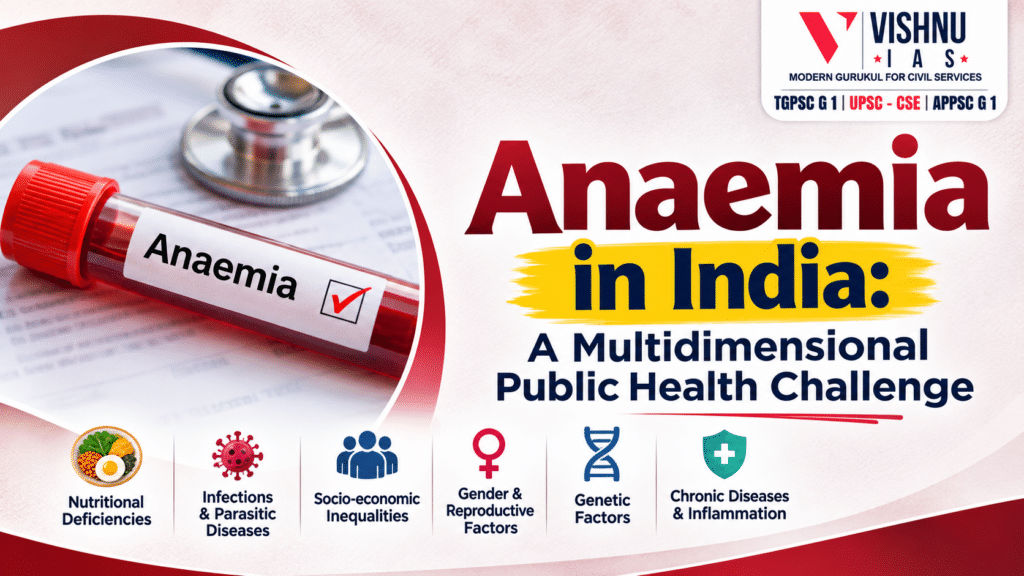
Anaemia in India: A Multidimensional Public Health Challenge
Introduction
Anaemia in India is a major public health challenge characterised by a haemoglobin concentration below the normal level, reducing the oxygen-carrying capacity of blood. It is not merely a nutritional deficiency but a manifestation of interconnected nutritional, infectious, socio-economic, genetic and reproductive health factors. According to NFHS-5 (2019–21), 67.1% of children (6–59 months), 57% of women (15–49 years) and 52.2% of pregnant women in India are anaemic.
Body
I. Multidimensional Causes of Anaemia in India
1. Nutritional Deficiencies
- Inadequate intake of iron, folate, vitamin B12 and vitamin A contributes to anaemia. Dietary patterns dominated by cereals and pulses, with limited dietary diversity and consumption of haem iron, aggravate the problem.
2. Poor Nutrient Absorption
- Phytates in cereals and pulses inhibit iron absorption, while polyphenols in tea and coffee and calcium in certain foods can further reduce its bioavailability. Inadequate vitamin C intake also limits iron absorption.
3. Infectious Diseases and Parasitic Infections
- Malaria, tuberculosis, hookworm and other parasitic infections contribute to anaemia through blood loss, inflammation and impaired nutrient absorption. Poor sanitation and unsafe drinking water aggravate the problem.
4. Socio-economic Inequalities
- Poverty, food insecurity, unequal access to nutritious food, poor healthcare facilities and lack of nutritional awareness disproportionately affect vulnerable communities, particularly rural households and tribal populations.
5. Gender and Reproductive Factors
- Early marriage, adolescent pregnancy, repeated pregnancies, inadequate birth spacing and menstrual blood loss increase women's vulnerability. Gender-based food discrimination can further aggravate nutritional deficiencies.
6. Genetic Factors
- Haemoglobinopathies such as sickle cell disease and beta-thalassaemia contribute to anaemia. These conditions are particularly relevant in certain tribal and geographically concentrated populations.
7. Chronic Diseases and Inflammation
- Chronic infections and inflammatory conditions interfere with iron metabolism and red blood cell production. The hormone hepcidin can restrict iron absorption and availability during inflammation.
II. Implications of the Anaemia Burden
1. Human Capital
- Anaemia affects cognitive development, learning capacity and physical growth among children, undermining long-term educational outcomes.
2. Maternal and Child Health
- Maternal anaemia increases the risk of adverse pregnancy outcomes, including premature births, low birth weight and maternal complications.
3. Economic Productivity
- Reduced physical capacity, fatigue and lower work efficiency affect workforce productivity and economic development.
4. Intergenerational Consequences
- Anaemic mothers are more likely to experience adverse birth outcomes, potentially perpetuating the cycle of malnutrition and poor health across generations.
III. Need for a Comprehensive Public Health Response
Strengthening Existing Interventions
- Anaemia Mukt Bharat (2018), through its 6x6x6 strategy, adopts a life-cycle approach covering six beneficiary groups, six interventions and six institutional mechanisms.
Dietary Diversification
- Promote affordable access to iron-rich foods, pulses, green leafy vegetables, millets, eggs and other nutrient-rich foods through nutrition-sensitive interventions.
Improved Diagnosis
- Haemoglobin testing should be complemented by appropriate investigations such as serum ferritin, vitamin B12 and inflammation markers wherever clinically indicated, to identify the underlying causes.
Disease Prevention
- Strengthen deworming, malaria control, maternal healthcare and water, sanitation and hygiene (WASH) interventions.
Targeted Fortification
- Food fortification, including double-fortified salt, may supplement nutritional interventions but should be supported by evidence on effectiveness, safety and cumulative nutrient intake.
Conclusion
Anaemia requires a nutrition-sensitive and health-system-wide approach rather than an iron-centric response. Integrating nutritional security, sanitation, reproductive healthcare, disease control and targeted medical interventions is essential to achieve the objectives of Anaemia Mukt Bharat and improve India's overall human development outcomes.