
Hooch Tragedies in India: Causes and Prevention of Spurious Liquor
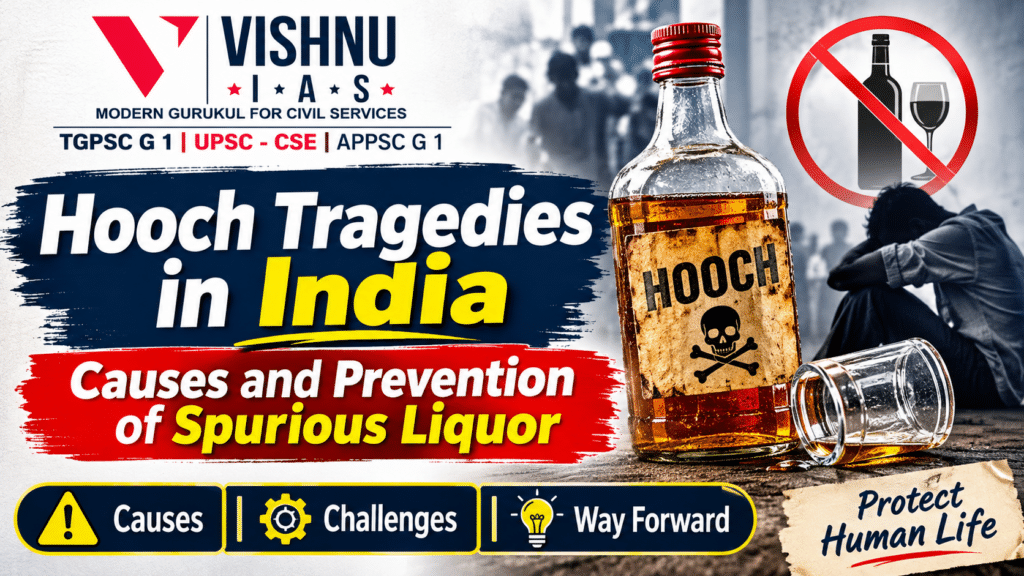
Hooch tragedies in India highlight the serious public health risks associated with illicit and spurious liquor. A hooch tragedy refers to mass deaths or serious illnesses caused by consuming illicit or spurious liquor, often adulterated with toxic substances like methanol. Such liquor is manufactured and sold outside regulated channels. According to NCRB data, ~400 people died in 2024 due to consumption of illicit liquor including 50 death in Kallakurichi of Tamil Nadu. Recently, in 2026, ~250 were hospitalized in Manipur due to illicit liquor consumption (17 dead).
I. Causes of Hooch Tragedies in India
- Poverty and Cheap Liquor Consumption: Poor and daily-wage workers often prefer cheaper illicit liquor. Poverty and addiction increase their vulnerability.
- Methanol Adulteration: Bootleggers mix industrial methanol to increase intoxicating potency. Methanol is highly toxic and can cause blindness, organ failure and death.
- Illegal Distilleries: Illegal distilleries operate despite existing prohibition laws. Inadequate inspections allow these networks to flourish.
- Industrial Methanol Diversion: Methanol has legitimate industrial applications. Poor monitoring enables its diversion into illegal liquor production.
- Corruption and Political Nexus: Corruption and political nexus weaken enforcement. Local liquor networks sometimes operate with official complicity.
- Alcohol Dependence and Lack of Awareness: Alcohol dependence sustains demand for cheap liquor. Lack of awareness increases the risk of consuming spurious products.
- Impact of Complete Prohibition: Complete prohibition can push liquor consumption underground. This may encourage bootlegging and unregulated production. However, prohibition alone cannot explain every tragedy.
II. Challenges in Preventing Illicit Liquor Production and Sale
1. Federal Structure and Regulatory Fragmentation
Alcohol regulation falls primarily under State jurisdiction. Entry 8 of the State List covers intoxicating liquors. Entry 51 concerns State excise duties. Different State laws create enforcement variations.
2. Inadequate Monitoring of Methanol
Methanol moves through legitimate industrial supply chains. Tracking its production, transportation and distribution remains challenging. Weak inter-State coordination further enables illegal diversion.
3. Institutional Corruption
Police and excise officials may ignore illegal operations. Political interference weakens accountability and enforcement.
4. Difficulties in Investigation and Prosecution
Establishing the source of adulteration requires forensic evidence. Delayed laboratory reports weaken criminal investigations. Poor evidence collection also reduces conviction rates.
5. Inadequate Healthcare Preparedness
Methanol poisoning requires immediate medical intervention. Delayed treatment can cause permanent blindness or death. Rural hospitals may lack specialised treatment facilities.
7. Livelihood and Rehabilitation Concerns
Bootlegging sometimes provides income to vulnerable communities. Enforcement without alternative livelihoods may sustain illegal networks. E.g.: Tamil Nadu’s Rehabilitation Fund for Reformed Bootleggers.
8. Policy Dilemma
Alcohol Prohibition aims to reduce alcohol-related harm. However, poorly enforced bans encourage underground markets. Regulated availability also requires strong public health safeguards.
III. Way Forward
- Taking strict action under BNS Section 103 and Section 105 that addresses murder and culpable homicide not amounting to murder.
- Establishing coordination among police and excise departments. Sharing intelligence about illegal supply networks and Investigating manufacturers, transporters and distributors.
- Improving forensic laboratory infrastructure and capacity. Ensuring timely toxicological examination of liquor samples and tracing the entire illegal supply chain.
- Involving SHGs, local bodies and civil society organisations. Establishing confidential mechanisms for reporting illegal distilleries. Conducting awareness campaigns about methanol poisoning.
- Training healthcare workers in methanol poisoning management. Ensure timely access to antidotes and dialysis facilities. Establish emergency referral mechanisms.
- Article 47 directs the State to prohibit intoxicating drinks. Combining alcohol regulation with public health interventions is needed. Strengthen de-addiction and rehabilitation programmes. Provide alternative livelihoods to vulnerable communities (DAY-NRLM; SEED scheme).
Conclusion
Hooch tragedies represent failures of public health protection. Prohibition cannot eliminate illicit liquor networks. Effective regulation, institutional accountability and community participation are essential. The ultimate objective is to protect human life and dignity.