

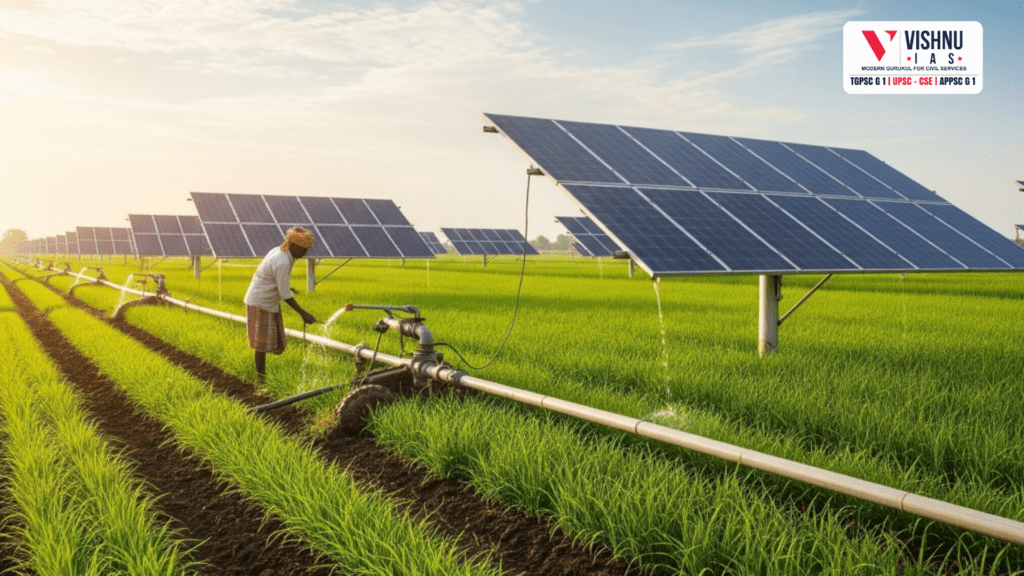
Agri Photovoltaics in India – Benefits, Challenges & PM-KUSUM Role
Agri Photovoltaics in India is emerging as a game-changer in the energy-agriculture nexus, especially with increased allocation to PM-KUSUM in Budget 2026–27.
Agri-Photovoltaics (AgriPV)
With increased allocation to PM-KUSUM in Budget 2026–27, AgriPV (Agrivoltaics) is emerging as a game-changer in India’s energy-agriculture nexus.
What is AgriPV?
- Dual use of land → Solar power + Crop cultivation
- Panels installed above/between crops → creating a mutual ecosystem
How it Works
- Panels provide shade → reduce heat stress & water loss
- Crops release moisture → cool panels → improve efficiency
Types of Systems
- Elevated (farming below panels)
- Row-based (spacing for crops)
- Vertical (bifacial panels)
- Greenhouse-integrated
Benefits
- Income diversification for farmers
- Water conservation (less evapotranspiration)
- Protection from climate extremes
- Supports rural value chains (cold storage, processing)
Challenges
- High initial costs
- Lack of clear policy/regulation
- Risk of reduced crop yields (if poorly designed)
- Limited large-scale data (only ~50 pilot projects)
Why Important for India?
- Supports 300 GW solar target & Net Zero goals
- Avoids conflict between energy expansion & food security
- Aligns with farmer income & sustainability goals
Way Forward
- Dedicated National AgriPV Mission
- Subsidies & viability gap funding
- Crop-specific design & R&D (ICAR, NISE)
- Farmer training via KVKs