
Vishnu IAS Academy

Explore how exclusionary immigration frameworks in modern democracies reflect racial and cultural biases. Learn how historical legacies, policy design, and algorithmic systems perpetuate inequality — and what reforms are needed for inclusive governance.

Exclusionary Immigration Frameworks and Racial Bias: How Modern Democracies Reflect Hidden Inequalities

Exclusionary Immigration Frameworks: Unmasking Racial and Cultural Bias in Modern Democracies Introduction: Exclusionary immigration frameworks refer to legal, administrative or policy mechanisms adopted by states to restrict, regulate or deny the entry, residence or rights of non-citizens (migrants, refugees, asylum seekers) on the basis of prescribed criteria. These frameworks often manifest through visa restrictions, deportation
Exclusionary Immigration Frameworks and Racial Bias: How Modern Democracies Reflect Hidden Inequalities Read More »

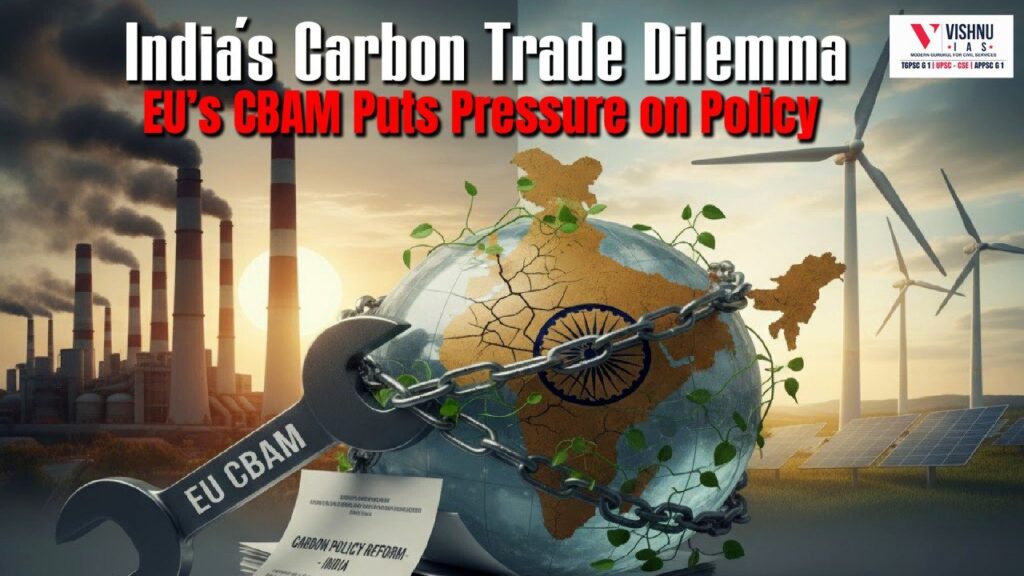
An in-depth analysis of India EU CBAM alignment — examining technical, legal and operational challenges as India shifts from intensity/project credits to a compliance CCTS and seeks CBAM recognition.

India EU CBAM alignment: Challenges in Aligning India’s Carbon Trading Framework with the EU’s CBAM

India EU CBAM alignment: Challenges in Aligning India’s Carbon Trading Framework with the EU’s CBAM This analysis focuses on India EU CBAM alignment and examines the technical, legal, and operational challenges India may face when seeking recognition or linkage with the EU’s CBAM and ETS frameworks. Introduction: The EU–India Joint Communication formalised a strategic agenda

India EU CBAM alignment: Challenges in Aligning India’s Carbon Trading Framework with the EU’s CBAM Read More »

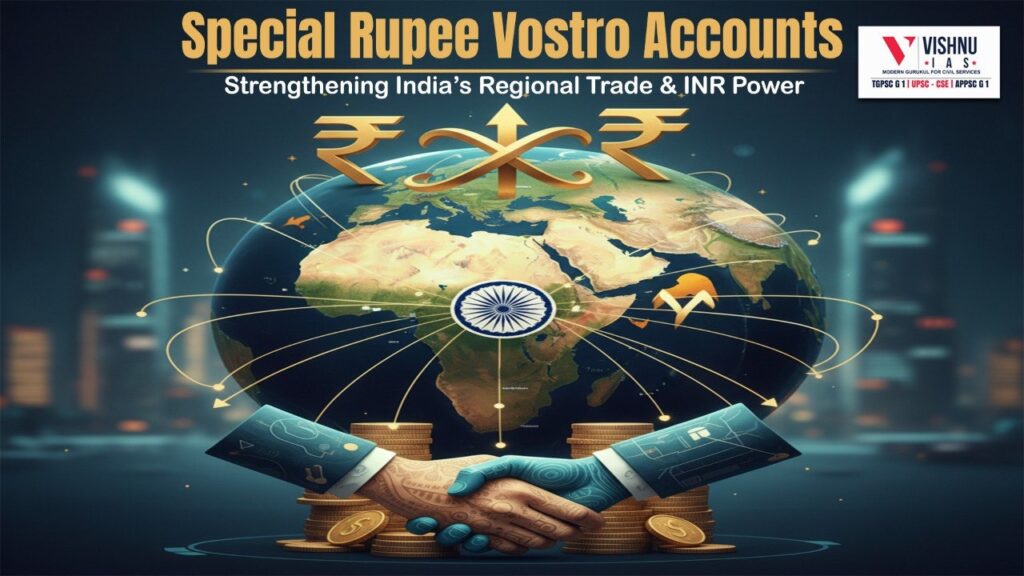
Discover how Special Rupee Vostro Accounts (SRVAs) are reshaping India’s economic engagement with neighbouring countries by enabling INR-denominated trade, reducing forex dependency, and strengthening regional financial integration.

How Special Rupee Vostro Accounts Are Transforming India’s Economic Engagement with Neighbouring Countries

How Special Rupee Vostro Accounts Can Transform India’s Economic Engagement with Neighbouring Countries <strongs <str The mechanism of Special Rupee Vostro Accounts (SRVAs) represents a new financial arrangement in which a foreign (correspondent) bank holds a rupee-denominated account with an authorised dealer bank in India, under the framework laid down by the Reserve Bank of

How Special Rupee Vostro Accounts Are Transforming India’s Economic Engagement with Neighbouring Countries Read More »

The Great Nicobar Island Development Project explores India’s balance between maritime security goals and constitutional ecological obligations.

Great Nicobar Island Development Project: Balancing Maritime Security and Ecological Obligations

Great Nicobar Island Development Project: Maritime Security vs Ecological Obligations <strong Introduction The Great Nicobar Island Development Project (GNIP) refers to the large-scale infrastructure plan for India’s southernmost Andaman & Nicobar archipelago. The project envisages a transshipment port, airport, township, power plant and logistics hub, representing an investment of approximately ₹80,000 crore. From a maritime-security

Great Nicobar Island Development Project: Balancing Maritime Security and Ecological Obligations Read More »

India leading the Global South faces institutional, strategic and neighbourhood challenges as shifting geopolitical alliances test its capacity to translate soft power and development cooperation into tangible leadership.

India Leading the Global South: Challenges Amidst Shifting Geopolitical Alliances

<!doctype html> India Leading the Global South: Challenges Amidst Shifting Geopolitical Alliances India leading the Global South must reconcile domestic constraints, regional credibility and great-power competition while navigating shifting geopolitical alliances to convert ambitions into effective leadership. Introduction: The term Global South broadly refers to nations in Asia, Africa and Latin America which share legacies

India Leading the Global South: Challenges Amidst Shifting Geopolitical Alliances Read More »

Explore India’s strategic options in Afghanistan after the Taliban takeover. Learn how India balances diplomacy, humanitarian aid, and regional security concerns to rebuild India-Afghanistan relations.

India’s Strategic Options in Afghanistan | Evaluating India’s Diplomatic and Security Choices

India’s Strategic Options in Afghanistan: Balancing Diplomacy, Development, and Security India’s Strategic Options in Afghanistan represent a critical policy recalibration following the Taliban’s return to power in 2021. India’s strategic posture toward Afghanistan must be understood against the backdrop of decades of engagement, regional geostrategic contestation, and evolving security threats. With the fall of the

India’s Strategic Options in Afghanistan | Evaluating India’s Diplomatic and Security Choices Read More »

Explore the challenges faced by agriculture-based carbon credit projects in India and discover actionable solutions to enhance inclusivity, effectiveness, and sustainability in the carbon market.

Challenges and Solutions for Agriculture-Based Carbon Credit Projects in India

Challenges and Solutions for Agriculture-Based Carbon Credit Projects in India Agriculture-Based Carbon Credit Projects in India are gaining attention as key tools to align economic development with climate goals. These projects can empower farmers, promote sustainable agriculture, and contribute to India’s net-zero commitments. However, they face several structural, institutional, and governance-related challenges that must be

Challenges and Solutions for Agriculture-Based Carbon Credit Projects in India Read More »

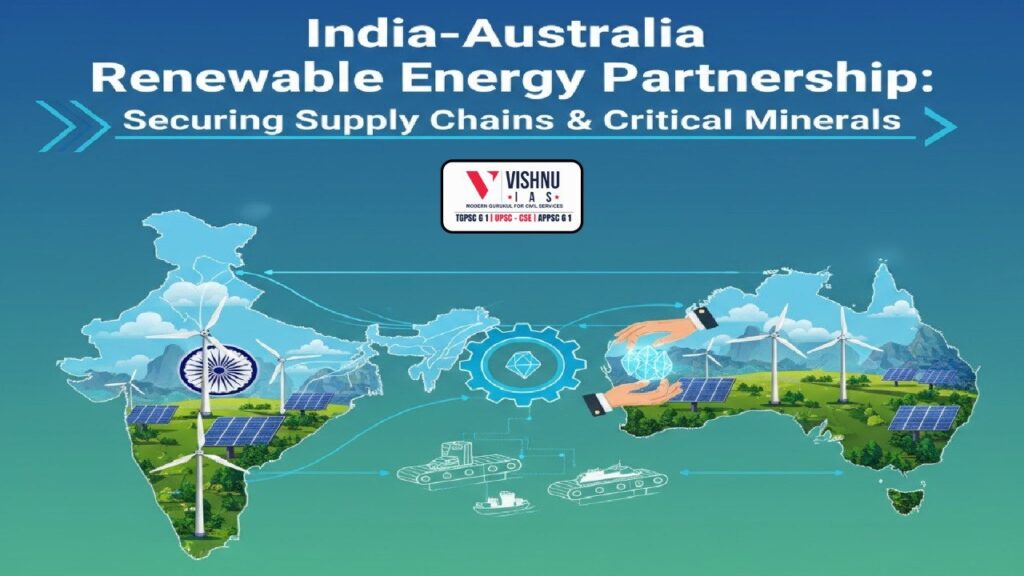
Explore the strategic importance of the India-Australia Renewable Energy Partnership (REP) in addressing supply chain vulnerabilities and reducing dependence on single-country dominance in critical minerals. Learn how REP strengthens clean energy security and Indo-Pacific resilience.

India-Australia Renewable Energy Partnership: Strategic Significance in Supply Chains & Critical Minerals

India-Australia Renewable Energy Partnership: Strategic Significance in Supply Chains & Critical Minerals India-Australia Renewable Energy Partnership: Strategic Significance in Supply Chains & Critical Minerals The India-Australia Renewable Energy Partnership (REP) constitutes a strategic bilateral framework aimed at deepening cooperation in the clean energy domain. At a time when the world is grappling with climate change,

India-Australia Renewable Energy Partnership: Strategic Significance in Supply Chains & Critical Minerals Read More »

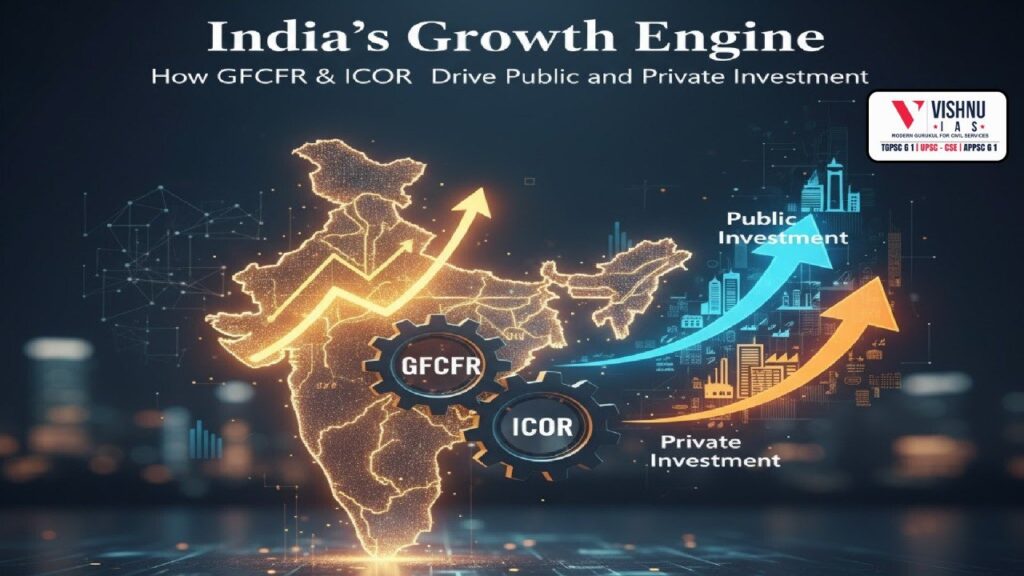
India potential growth rate is determined by the interplay of public and private investment. This analysis examines GFCFR and ICOR to evaluate how investment quantity and efficiency shape India's sustainable growth prospects.

India Potential Growth Rate: Role of Public & Private Investment, GFCFR & ICOR

India Potential Growth Rate: Role of Public & Private Investment, GFCFR & ICOR India Potential Growth Rate: Role of Public & Private Investment, GFCFR & ICOR India potential growth rate is shaped by the balance between investment quantity and capital efficiency — primarily public and private investments measured by Gross Fixed Capital Formation Rate (GFCFR)

India Potential Growth Rate: Role of Public & Private Investment, GFCFR & ICOR Read More »

Scroll to Top