
CPI-AL Wage Indexation Living Wages: Challenges and Need for Reform in Rural India
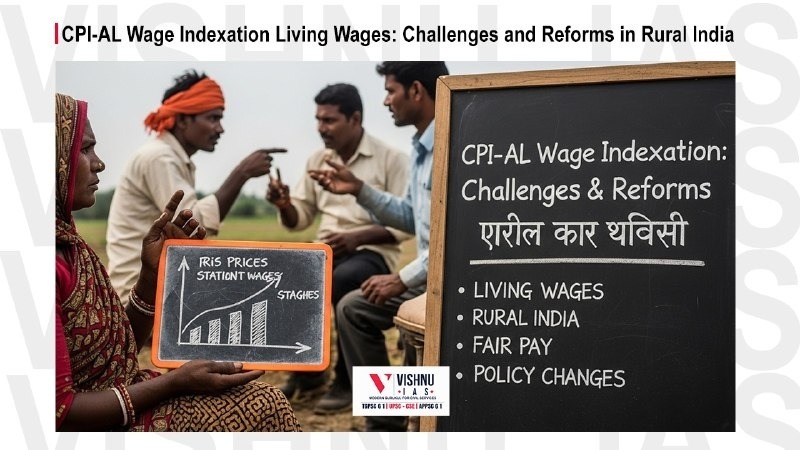
CPI-AL wage indexation living wages is a crucial issue in India’s rural economy, especially in the context of changing consumption patterns and labour dynamics.
Introduction
A “living wage” refers to a remuneration level sufficient to ensure a decent standard of living, covering basic needs such as food, housing, healthcare, education, and social security. In India’s rural employment programmes, wage indexation is primarily linked to the Consumer Price Index for Agricultural Labourers (CPI-AL), which tracks inflation based on a consumption basket of agricultural households.
However, rural India has undergone structural transformation—with diversification of income sources, rising non-food expenditures, and increased dependence on services. While CPI-AL-based revisions have ensured nominal wage increases, evidence from recent labour surveys shows real wage stagnation and widening gaps between statutory wages, market wages, and programme wages, raising concerns about its adequacy in ensuring living wages.
1. Limitations of CPI-AL in Capturing Changing Rural Realities
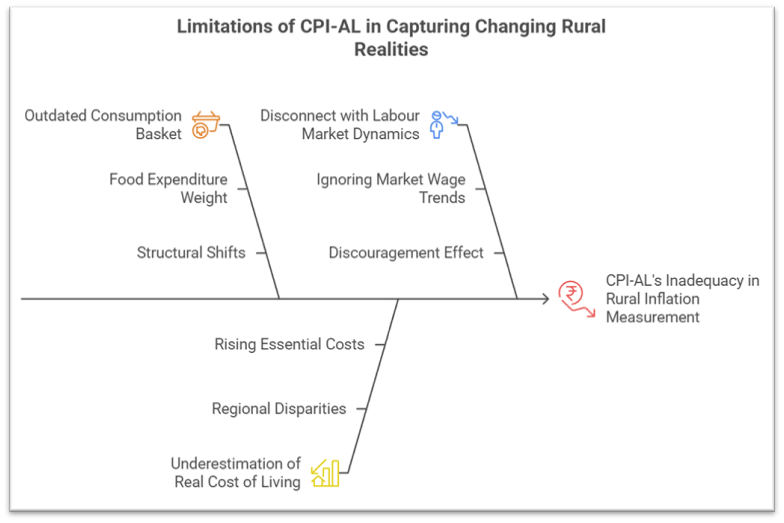
1.1 Outdated Consumption Basket and Structural Shifts
CPI-AL is heavily weighted toward food expenditure, whereas rural households today spend more on healthcare, education, transport, and digital services, leading to underestimation of actual inflation.
With rural diversification into non-farm employment, consumption patterns resemble semi-urban households, making CPI-AL less representative.
Example: Periodic Labour Force Survey trends indicate rising non-agricultural employment, but CPI-AL still reflects a predominantly agrarian consumption structure.
1.2 Underestimation of Real Cost of Living
CPI-AL fails to adequately capture regional disparities in prices, especially in high-cost states, leading to uniform but inadequate wage revisions.
Rising costs of essentials such as private healthcare and education are not proportionately reflected.
Case Study: In states like Kerala and Tamil Nadu, higher human development indicators correlate with higher cost of living, yet indexed wages often lag behind actual expenses.
1.3 Disconnect with Labour Market Dynamics
Wage indexation based solely on CPI-AL ignores market wage trends, causing programme wages to fall behind prevailing agricultural wages.
This leads to a “discouragement effect”, where workers prefer private employment due to better pay and timely payments.
Example: Labour Bureau data over time shows programme wages stagnating at ~60–75% of market wages, reducing attractiveness.
2. Implications for Wage Policy, Employment, and Rural Welfare
2.1 Erosion of Real Wages and Purchasing Power
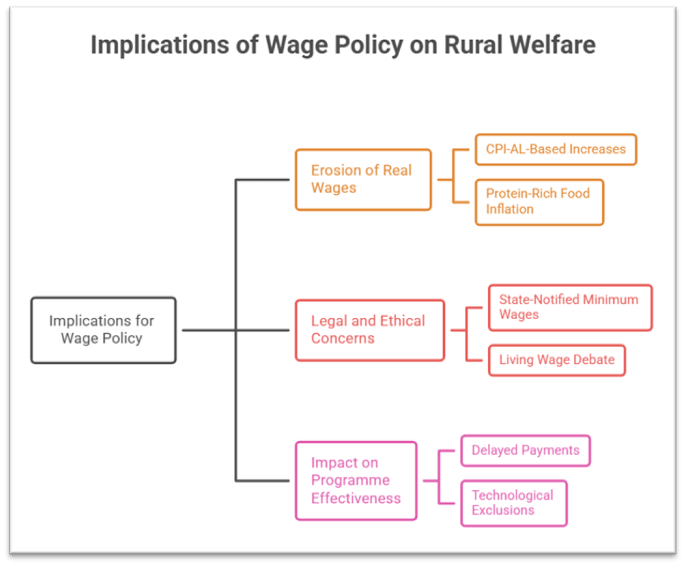
CPI-AL-based increases often result in “real wage freeze”, where wages rise nominally but fail to improve purchasing power.
This undermines the objective of income security and weakens the poverty alleviation role of employment programmes.
Example: Rising inflation in protein-rich food, fuel, and services disproportionately affects poor households, not fully captured by CPI-AL.
2.2 Legal and Ethical Concerns: Minimum vs Living Wage
When indexed wages fall below state-notified minimum wages, it raises questions about compliance with labour rights frameworks.
The distinction between minimum wage (subsistence) and living wage (dignified life) becomes critical in policy debates.
Case Study: Judicial interventions have intermittently questioned whether state programmes can legally pay below minimum wages, though clarity remains limited.
2.3 Impact on Programme Effectiveness and Governance
Low wages combined with delayed payments and technological exclusions (e.g., Aadhaar-based payment failures) reduce participation.
Declining worker interest weakens social accountability, increasing risks of corruption and leakages.
Example: Studies by civil society groups highlight how payment delays and low wages reduce worker turnout, affecting asset creation quality.
3. Towards a More Robust Mechanism for Ensuring Living Wages
3.1 Multi-Dimensional Indexation Framework
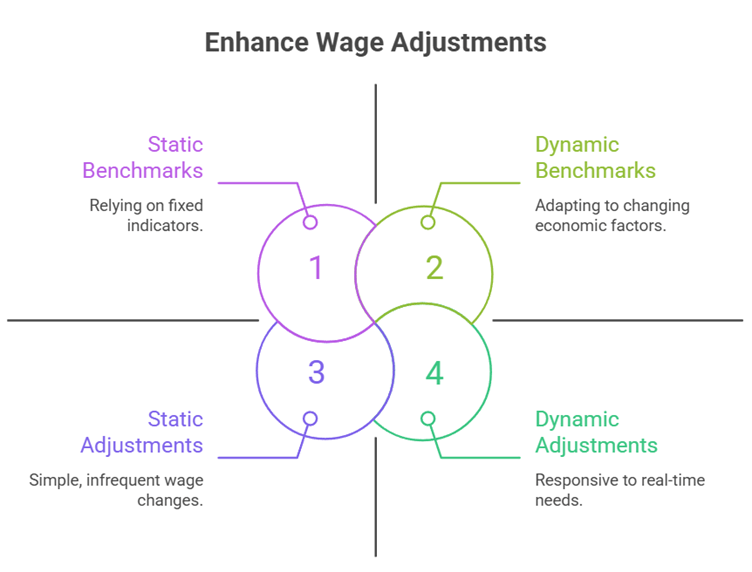
Replace sole reliance on CPI-AL with a composite index, combining CPI-Rural (CPI-R), state-specific inflation indices, and sectoral wage trends to ensure dynamic and realistic wage adjustments.
3.2 Linking Wages to Minimum Wage and Productivity Benchmarks
Establish a statutory rule: programme wages ≥ state minimum wages, ensuring legal compliance, along with productivity-linked incentives.
3.3 Institutional and Administrative Reforms
Create an independent Wage Commission for Rural Employment to periodically revise wages based on cost of living surveys, nutritional requirements, and household consumption data.
Conclusion
The continued reliance on CPI-AL for wage indexation in a rapidly transforming rural economy risks systematic undervaluation of labour and erosion of real incomes.
A composite, legally anchored, and dynamically updated wage indexation system is essential to ensure dignity, equity, and sustainability in rural employment programmes.
Recap: